

Tongue Tie Release is a simple yet important procedure that can greatly improve a child’s feeding, speech, and oral development. Many parents ask, “What is the best age to treat tongue tie?” The truth is, age alone is not the deciding factor — function is.
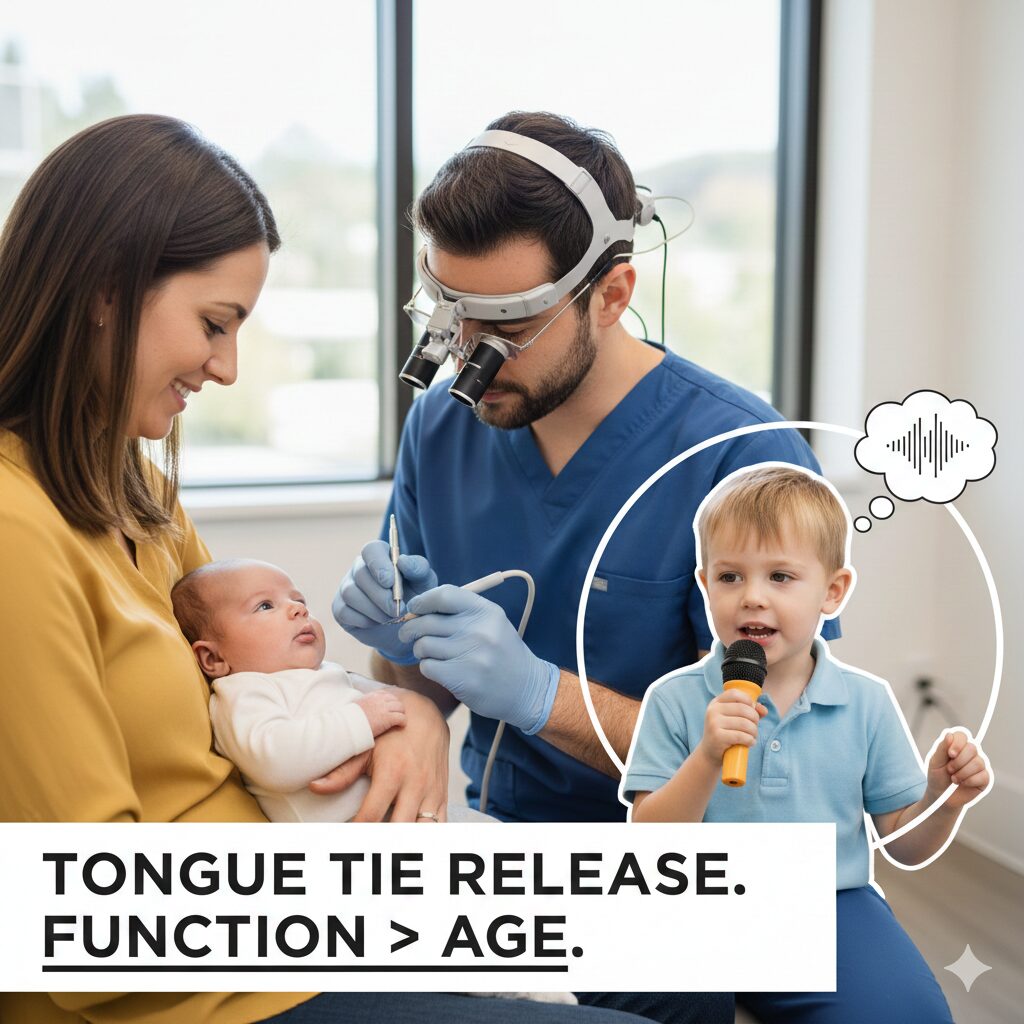
In this guide, we’ll explain when Tongue Tie Release is recommended, age-based considerations, and how to decide if treatment is necessary for your child.
What Is Tongue Tie?
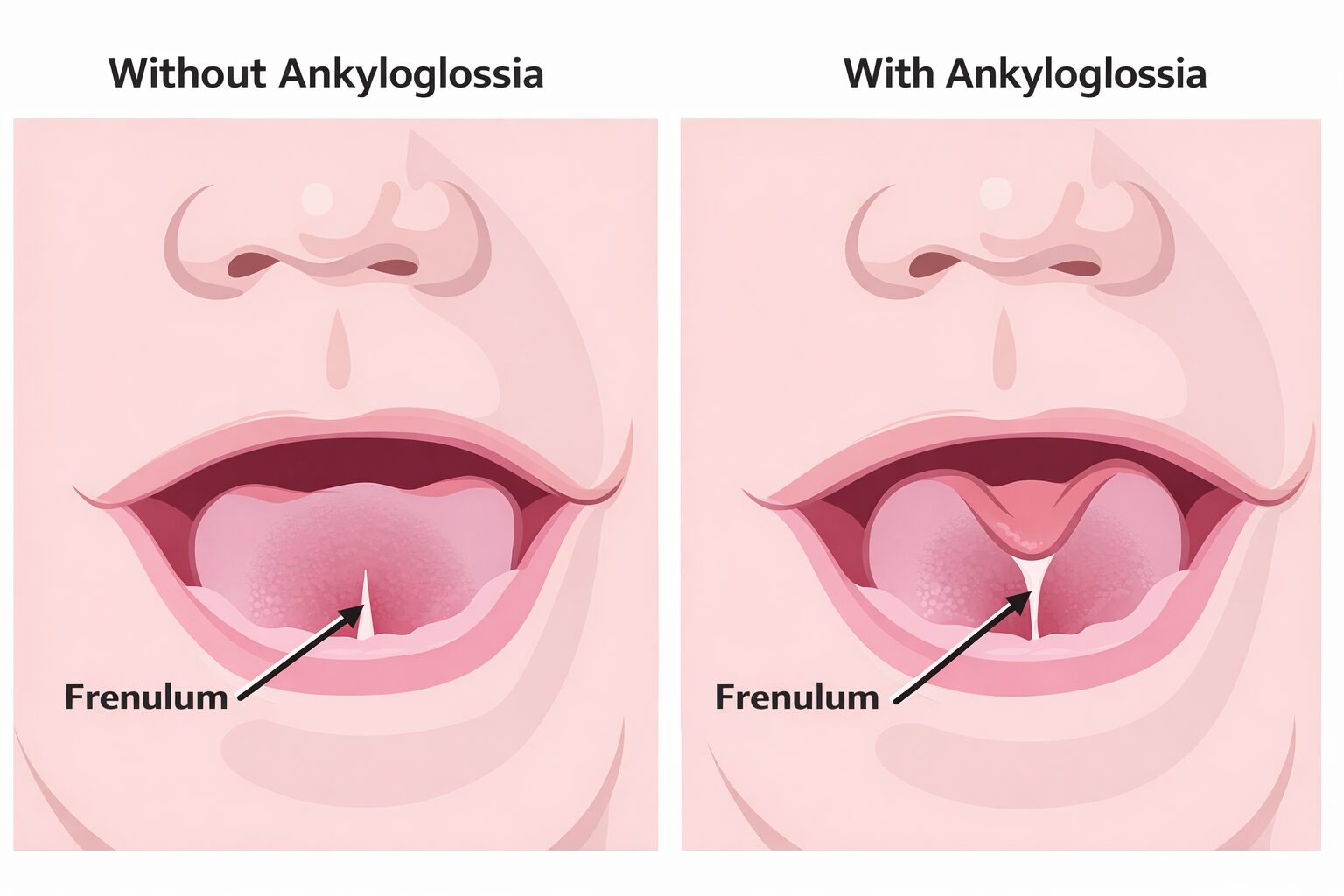
Tongue tie (ankyloglossia) occurs when the lingual frenulum — the tissue connecting the tongue to the floor of the mouth — is too short, thick, or tight. This restricts tongue movement and may interfere with:
• Breastfeeding
• Bottle feeding
• Speech development
• Chewing and swallowing
• Oral hygiene and jaw growth
Best Age for Tongue Tie Release
Tongue Tie Release in Newborns (0–3 Months)
This is the ideal time for Tongue Tie Release if symptoms are present, especially breastfeeding problems.
Why early treatment is best:
• Simple procedure (scissors or laser)
• Minimal bleeding
• Usually no anesthesia needed
• Fast healing and quick improvement
Common signs in newborns:
• Poor latch during breastfeeding
• Painful breastfeeding for mom
• Poor weight gain
• Clicking sounds while feeding
If breastfeeding is affected, Tongue Tie Release should be done as early as possible.
Tongue Tie Release in Infants (3–12 Months)
Tongue Tie Release is still very effective during infancy, particularly if feeding issues continue.
Possible indications include:
• Persistent feeding difficulties
• Bottle refusal
• Excessive gas or colic from poor latch
• Difficulty sticking the tongue out
Things to consider:
• May require more restraint
• Sometimes local anesthesia is needed
Early correction at this stage can prevent future feeding and speech problems.
Tongue Tie Release in Toddlers (1–3 Years)
At this age, Tongue Tie Release is recommended only when functional problems are present.
Indications include:
• Speech delay
• Difficulty producing sounds (t, d, l, n, r)
• Trouble chewing, licking, or swallowing
• Open-mouth posture or excessive drooling
Important notes:
• Often requires local or light sedation
• Speech therapy support after release is strongly recommended
Tongue Tie Release in Children (4+ Years)
Tongue Tie Release can still be beneficial for older children when symptoms persist.
Treatment may be considered for:
• Ongoing speech problems
• Jaw development concerns
• Difficulty maintaining oral hygiene
• Social or functional challenges
At this stage, treatment usually involves:
• Local or general anesthesia
• Myofunctional or speech therapy after release
Age Is NOT the Most Important Factor
The most important rule in Tongue Tie Release is simple:
✔️ Function matters more than age
✔️ If tongue tie affects feeding, speech, breathing, or oral function, treatment is recommended
✔️ If there are no symptoms, observation is often enough
Simple Decision Guide for Parents
• Breastfeeding problem? → Treat ASAP (newborn period is best)
• Speech problem? → Treat when speech issues become evident
• No symptoms? → Observe; no rush
A proper evaluation by a dental or medical professional trained in tongue tie assessment is essential.
Frequently Asked Questions About Tongue Tie Release
❓ Is Tongue Tie Release painful for babies?
Answer: No. In newborns, the procedure is quick and usually causes minimal discomfort, with fast healing.
❓ Can tongue tie fix itself without treatment?
Answer: In some cases with no symptoms, observation is enough. However, functional problems usually do not resolve on their own.
❓ Does my child need therapy after Tongue Tie Release?
Answer: Tongue Tie Release is a safe and effective procedure when done for the right reasons. The key is not rushing based on age alone, but carefully assessing how tongue tie affects your child’s daily function and development.
📌 Final Thoughts
Tongue Tie Release is a safe and effective procedure when done for the right reasons. The key is not rushing based on age alone, but carefully assessing how tongue tie affects your child’s daily function and development.
📞 Call to Action
Book a consultation at Prime Oral Dental Clinic today to assess your child’s needs and determine if Tongue Tie Release is the right step for healthy feeding, speech, and oral development.
🏥 Prime Oral Dental Clinic
📍 Clinic Locations:
✔ Angeles City Branch – LD&C Building, Unit 1, Pandan-Magalang Road, Brgy. Mining, Angeles City, Pampanga
✔ Apalit Branch – MST Building, Unit 3, 2nd Floor, MacArthur Highway, Brgy. Paligui, Apalit, Pampanga
📞 Contact Numbers:
📱 Angeles: 0999 889 2326
📱 Apalit: 0999 889 2320
Link: https://www.facebook.com/primeoraldental
Website: Home